If you’ve ever struggled to save money, you’re not alone. The truth is, most people save only what’s left after paying bills and spending. But what if there’s nothing left? That’s why the “pay yourself first” strategy is a game-changer.
What Does “Pay Yourself First” Mean?
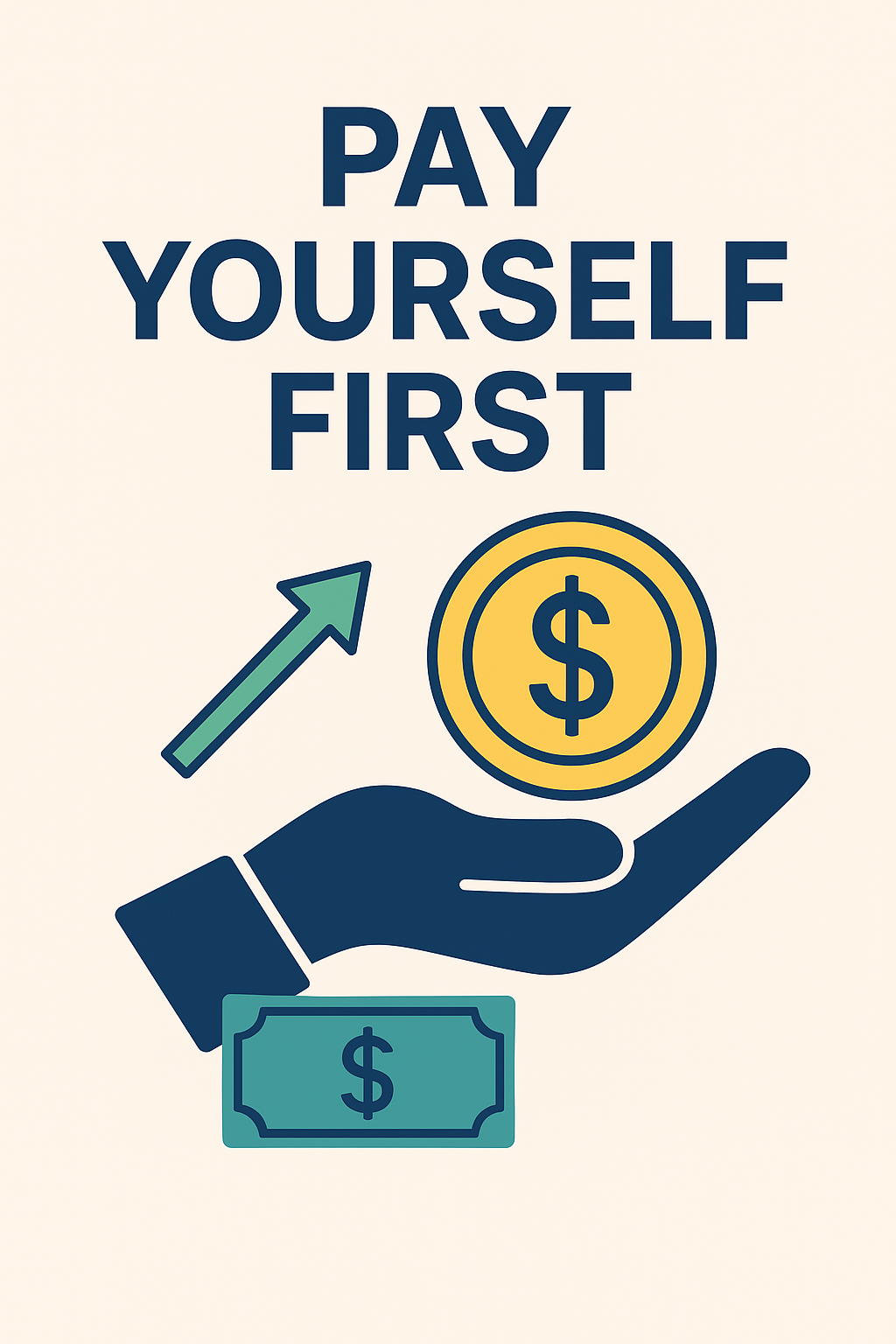
The concept is simple: before paying rent, groceries, or anything else, set aside money for your future. Treat your savings like a non-negotiable bill.
How to Pay Yourself First
- Automate your savings. Set up a direct deposit or auto-transfer the day your paycheck hits.
- Start small. Even $50–$100 per month adds up over time.
- Prioritize retirement. Contribute to a 401(k) or IRA before spending on extras.
Why It Works
This method removes willpower from the equation. Instead of hoping you’ll have money left, you guarantee it by saving first. Over decades, compounding transforms small contributions into significant wealth.
💡 Example: Saving just $200 a month at 7% annual growth becomes $240,000 in 30 years.
Key Takeaway
Paying yourself first isn’t about earning more. It’s about making saving your top priority. By automating this habit, you’ll build wealth with less stress and more consistency.
Conclusion
Whether you’re saving for an emergency fund, retirement, or financial freedom, “pay yourself first” is the foundation. Start today—even with a small amount—and let compounding do the heavy lifting.