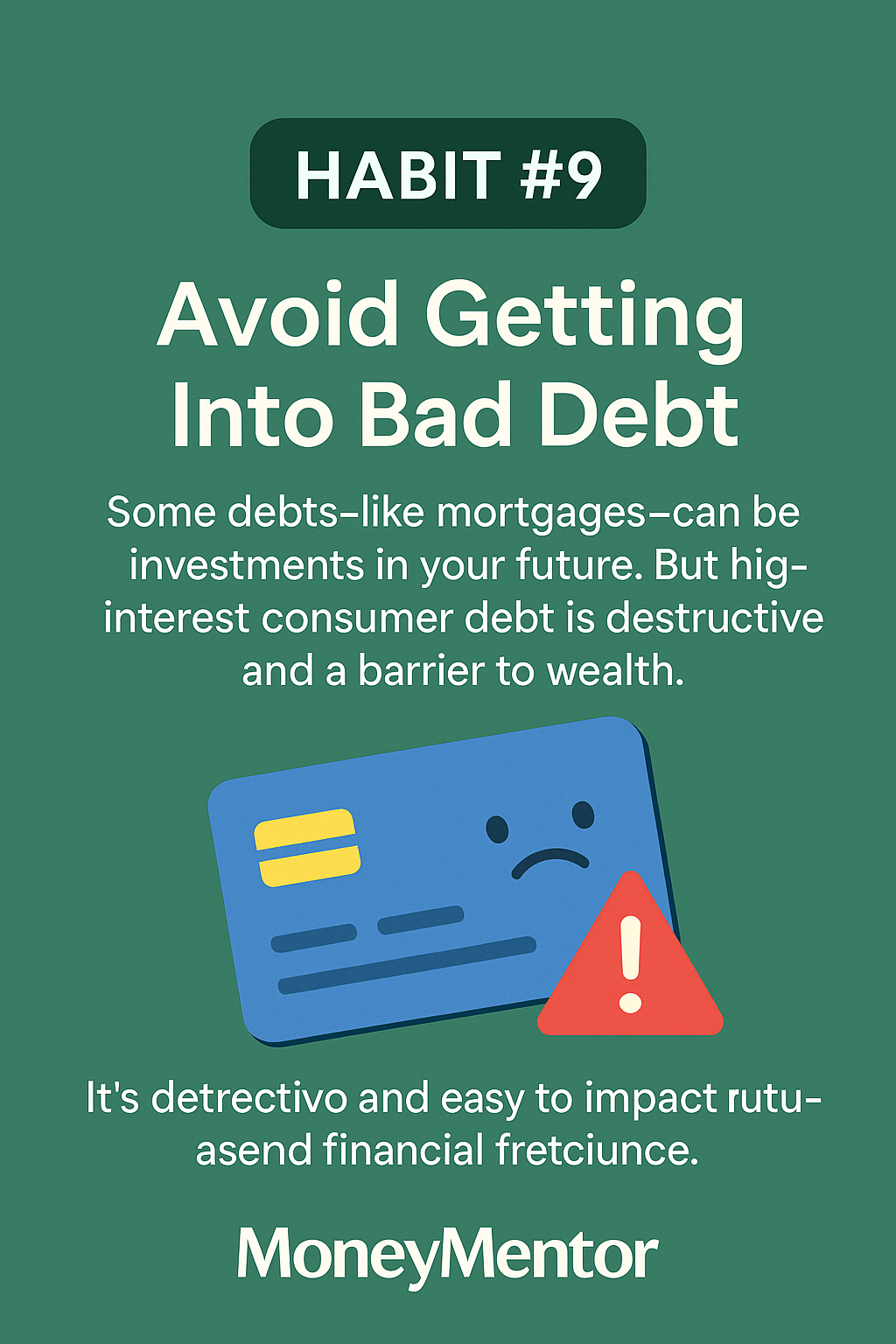
Bad debt is one of the fastest ways to derail your financial progress. Unlike strategic debt—such as mortgages or certain student loans—bad debt drains your income, increases stress, and blocks your path to financial freedom.
High-interest consumer debt (like credit cards, payday loans, rent-to-own, and buy-now-pay-later traps) grows faster than most people can pay it down. The longer you carry it, the more it steals from your future.
Why Bad Debt Hurts Your Financial Health
- It grows rapidly due to high interest
- Your minimum payments barely reduce the balance
- It reduces your ability to save and invest
- It creates long-term financial stress
- It limits your career and lifestyle options
Good Debt vs Bad Debt
Good Debt: Debt that supports long-term value or earning potential.
- Mortgage
- Student loans
- Business loans
- Real estate investment loans
Bad Debt: Debt used for short-term consumption or lifestyle spending.
- Credit cards
- Payday loans
- Rent-to-own purchases
- High-interest personal loans
- BNPL used irresponsibly
How to Avoid and Eliminate Bad Debt
- Pay off high-interest debt first. Use the Debt Snowball or Debt Avalanche method.
- Create a repayment plan. Know every balance, interest rate, and due date.
- Stop adding new debt. Freeze your cards if needed.
- Build an emergency fund. Prevent using credit for unexpected expenses.
- Redirect money toward investments. Free cash flow accelerates your wealth.
The Long-Term Benefits of Avoiding Bad Debt
- More savings and investment potential
- Less financial stress
- Greater freedom and flexibility
- Accelerated wealth building
- A more stable long-term financial future
Ready to Improve Your Finances?
Take control of your money, one powerful habit at a time.
- Read all 13 Money Mentor Habits
- Follow on TikTok & YouTube: @MoneyMentorByMarte
- Download your free budgeting guide (coming soon)