What Is Compounding?
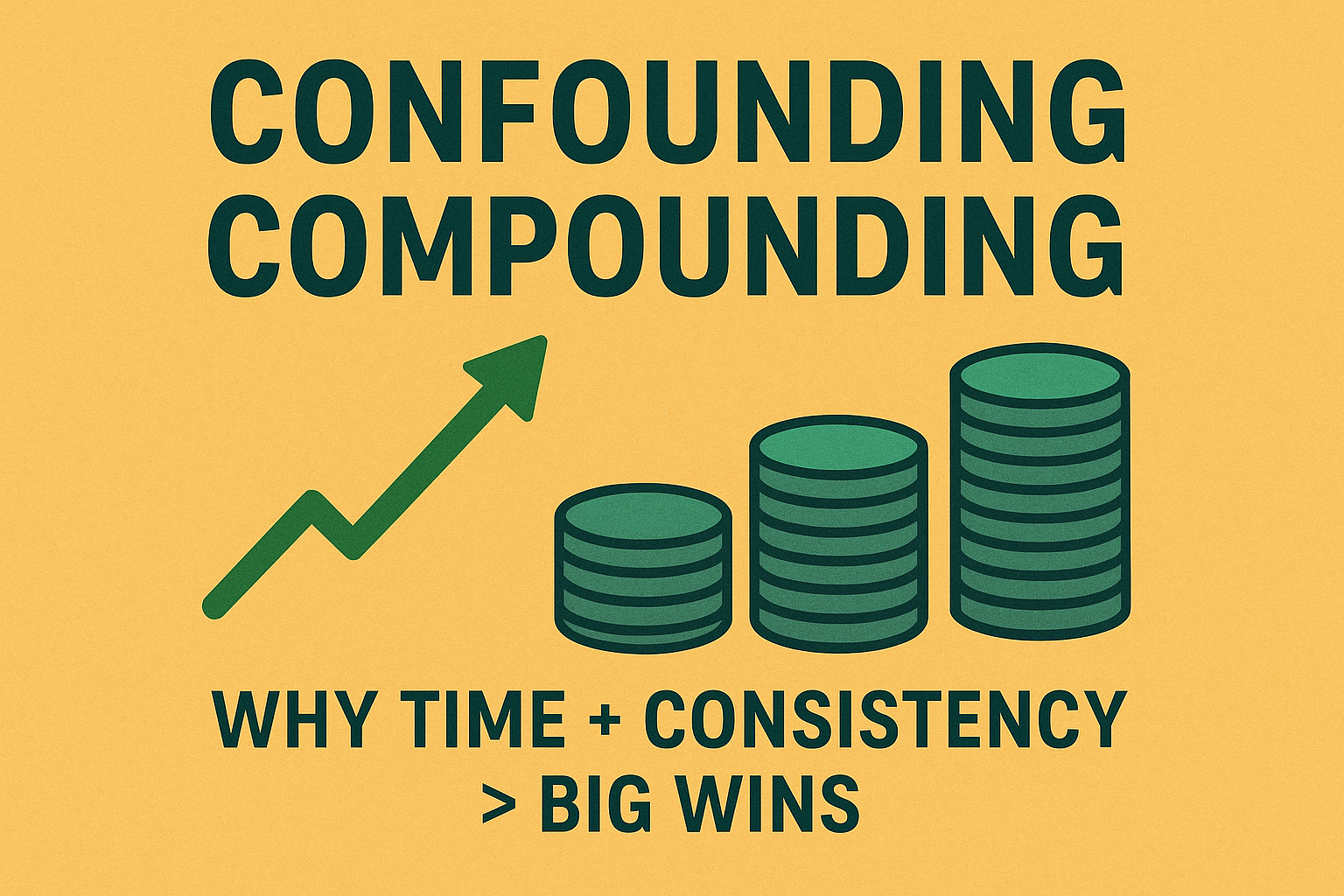
- Definition: When your investment earns returns, and those returns themselves generate further returns. It’s a “snowball effect” of growth.
- Even modest returns, sustained over time, can lead to tremendous growth.
Why People Misjudge It
- Linear thinking vs exponential truth
We’re used to thinking of gains in straight lines, but compounding grows like a curve. In the early years, growth feels minimal. Later: dramatic. - Patience is undervalued
Big returns don’t show up overnight. People often get discouraged by slow early results and quit. - Small disadvantages multiply too
Fees, taxes, missed opportunities, or delaying investing—everything compounds negatively as well.
Real-life Example
- Suppose you invest $200/month at a 7% annual return for 30 years. That can grow to ~$185,000.
- But if you start 10 years later doing the same amounts, you end up with far less—not because you earned less yearly, but because you missed out on 10 years of compounded returns.
How to Use Compounding to Your Advantage
- Start now — even if contributions are small.
- Stick with “good returns you can sustain” rather than chasing high risk.
- Reinvest dividends and let gains roll.
- Avoid high fees / costs that chip away at returns.
- Be patient — time is your greatest ally.
Final Thoughts
Compounding is one of the most powerful forces for building wealth—but it requires humility, consistency, and time. The people who get it aren’t always those with the flashiest moves, but those who do a little every day, for years.